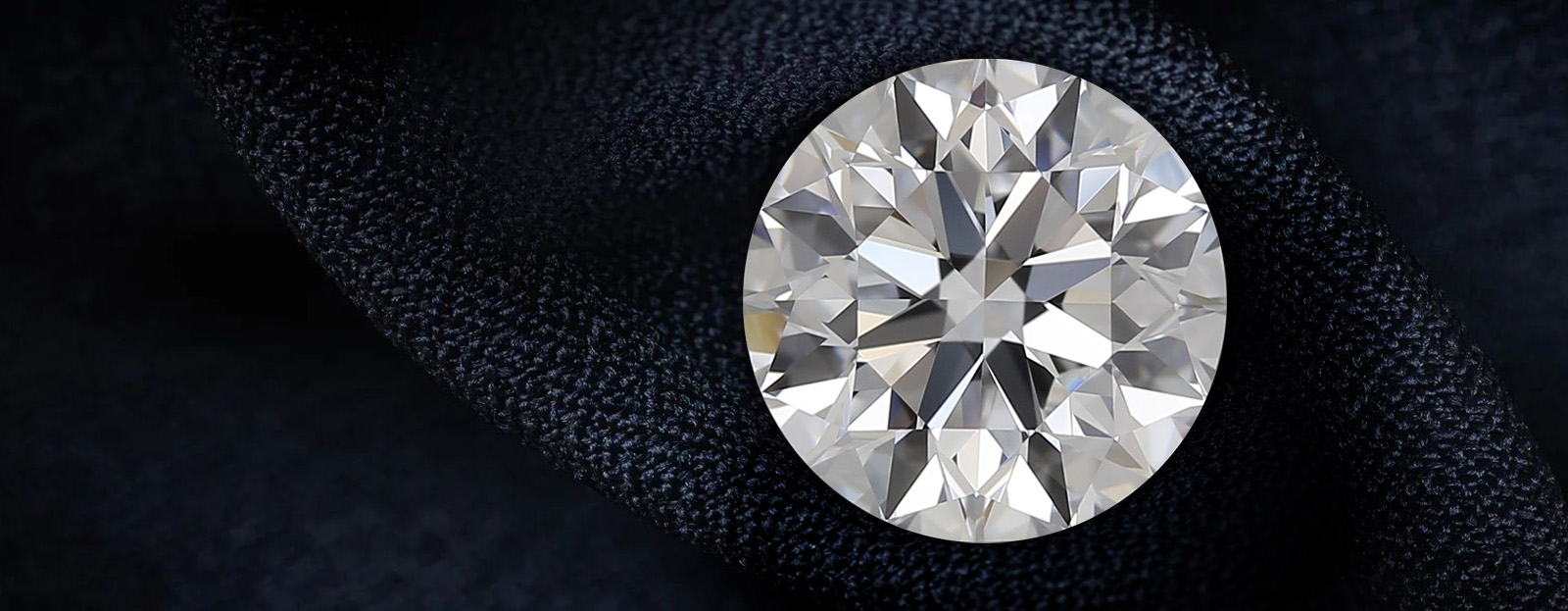
Each diamond is a singular marvel of nature, formed billions of years ago beneath the Earth’s surface by incomprehensible forces. They epitomize love, emotion, commitment, and purity, with no two diamonds being exactly alike, akin to snowflakes.
While their enduring beauty, rarity, and emotional resonance have always been their most cherished attributes, a standardized system was essential to assign a measurable value to them. This system, known as the 4Cs of Diamond Quality: Cut, Colour, Clarity, and Carat weight. At Dia9, we use the 5Cs standards incorporated the fifth C, Care. The 5Cs facilitates a universal language through which diamond quality can be articulated, empowering customers to make informed purchasing decisions.
The cut of a diamond, distinct from its shape, is pivotal in unlocking the stone's brilliance, which is a harmonious blend of brightness, fire, and scintillation.
Described as the foremost characteristic, the cut significantly influences a diamond's beauty, requiring immense skill and expertise to achieve its mesmerizing light performance. It is an art that mirrors the craftsmanship of those who meticulously cut and polish the stone. A diamond's cut grade provides an objective evaluation of howeffectively its facets interact with light, directly impacting its sparkle.
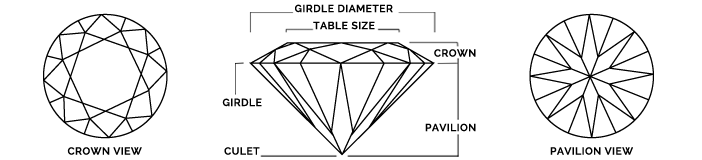
Various factors, including weight relative to diameter, girdle thickness for durability, facet symmetry, and polish quality, are considered in assessing the cut. Properly proportioned cuts ensure optimal light return through the diamond's top, enhancing its brilliance.
Cut is usually graded across five categories: Excellent, Very Good, Good, Fair and Poor. The cut profoundly affects the stone's value and aesthetic appeal. While technically intricate to analyze, the visual allure of the diamond remains equally significant in its appraisal.
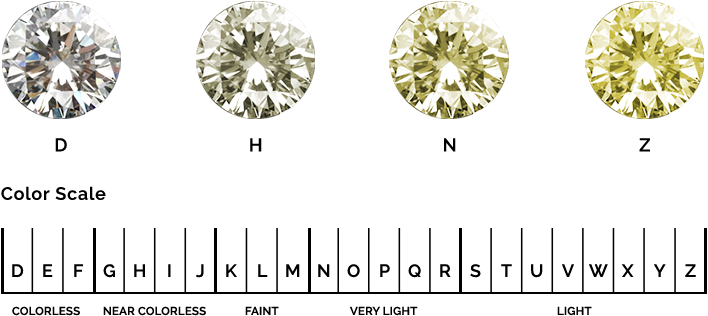
GIA's diamond colour-grading scale, ranging from D to Z, stands as the foremost industry standard. Commencing with D, symbolizing colourless, the scale progresses through increasing levels of colour presence up to Z.
Color, in diamond grading, signifies the absence of colour and evaluates the whiteness of the diamond. A chemically pure and structurally flawless diamond exhibits no discernible hue, akin to pure water, thus boasting a higher value.
Although these colour distinctions may elude the untrained eye, they wield significant influence over a diamond's quality and price. Fancy-colour diamonds, outside the conventional colour range, particularly yellow ones, carry premium values, especially when their colour intensity or vividness amplifies.
The decision to commence the scale with D, rather than a lower letter grade like A, B, or C, was to mitigate confusion with alternative grading systems employed by companies in the past. D was selected arbitrarily to initiate the scale and establish clarity in differentiation.
Natural diamonds form because of carbon subjected to intense heat and pressure deep within the earth. This intense process can lead to the development of internal features known as 'inclusions' and external features termed 'blemishes.' Diamonds with minimal and smallest imperfections receive the highest clarity grades. Typically microscopic, these imperfections generally do not detract from a diamond's visual appeal in any significant manner.
Clarity denotes the assessment of the quantity and size of these minute imperfections present in nearly all diamonds. The industry employs a grading scale comprising 6 categories, some of which are further subdivided, resulting in a total of 11 specific grades.
The grading scale includes:

While commonly associated with size during diamond selection, carat (ct) can often be misconstrued. Contrary to popular belief, carat pertains to the weight of gems and diamonds, not their dimensions. It's important to differentiate carat from karat, which denotes the purity of gold.
Carat weight specifically indicates the mass of gems and diamonds, not their physical dimensions. The weight of a gemstone is influenced by its form and type, which vary due to the differing densities of each stone. Consequently, diamonds with identical carat weights may exhibit varying costs due to the influence of other factors such as cut quality. For instance, a diamond's cut can affect how substantial its carat weight appears; diamonds with smaller carat weights may appear larger when possessing higher cut grades. Total carat weight signifies the combined mass of all diamonds within a single piece of jewellery.
The fifth criteria, Care, plays a vital role in the overall evaluation and appreciation of a diamond. While the traditional 4Cs focus on the physical attributes of the stone, such as its cut, color, clarity, and carat weight, the concept of Care delves into the maintenance and preservation of the diamond's beauty and integrity over time.
Care encompasses various aspects, including proper cleaning, storage, and handling of the diamond to prevent damage and maintain its brilliance. Regular cleaning using gentle solutions and soft brushes helps remove dirt and debris that may dull the diamond's sparkle. Additionally, storing the diamond in a secure and cushioned environment, away from other jewellery pieces to prevent scratching, is crucial.
Furthermore, handling the diamond with care during everyday activities and avoiding exposure to harsh chemicals or abrasive surfaces can prolong its lifespan and ensure its lasting beauty. Ultimately, integrating Care into the evaluation process underscores the importance of responsible ownership and maintenance, allowing diamonds to continue telling their unique stories for generations to come