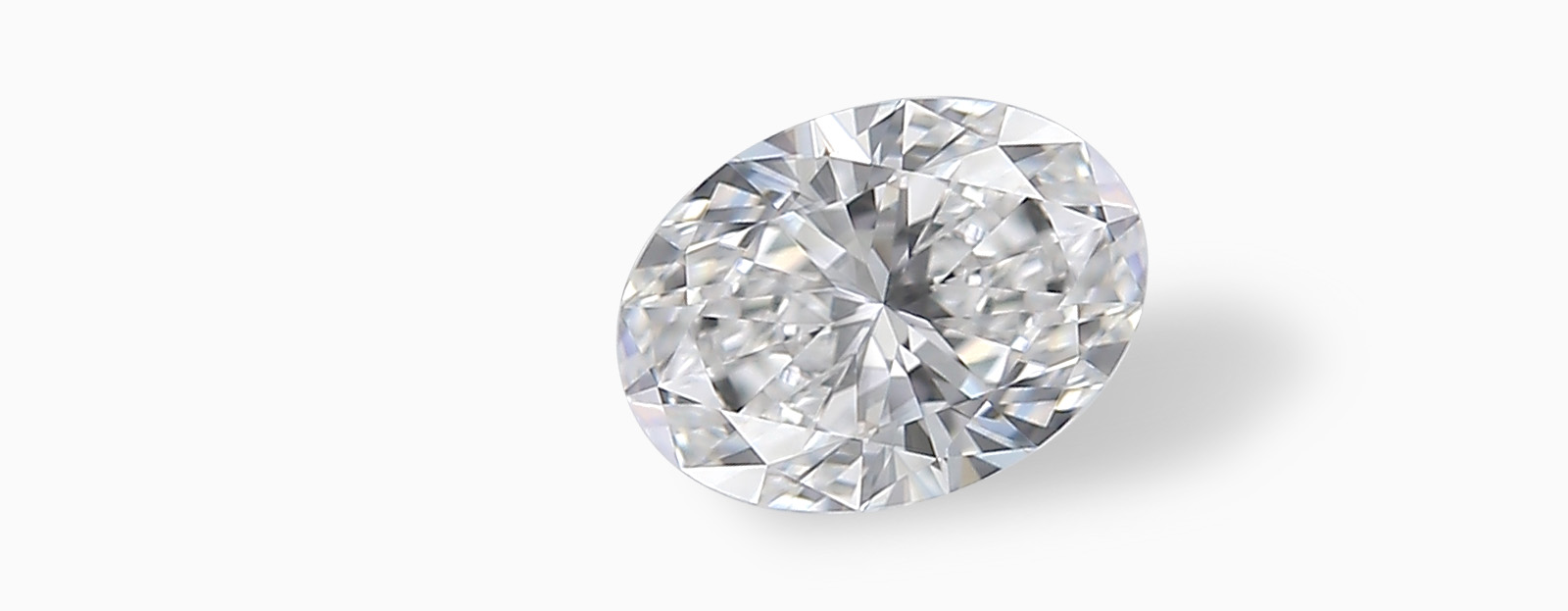
The diamond's shape, a significant attribute referring to its physical structure, often stands as the foremost consideration for couples or individuals in search of the perfect engagement or wedding ring. The selection may hinge on personal preferences, the significance of the occasion, such as a wedding, engagement, or anniversary celebration, or current trends in the diamond industry. It might also be linked to considerations of quality and worth. Each diamond shape possesses unique characteristics that contribute to its individual quality. As a result, each shape presents its own allure, style, and brilliance.
While round diamonds remain the most popular and timeless choice, there is an increasing allure towards "non-round" or "fancy shaped" diamonds among many customers. These include a variety of shapes such as emerald, princess, heart, cushion, asscher, radiant, oval, pear, or marquise. Certain diamond shapes bring facets on the pavilion, or underside, to a point, maximizing light reflection. Conversely, others emphasize diamond clarity with parallel facets on the pavilion, creating a subtle shimmer while enhancing clarity. Each shape possesses its own narrative and distinctive beauty, much like every woman with her unique style and personal preferences.
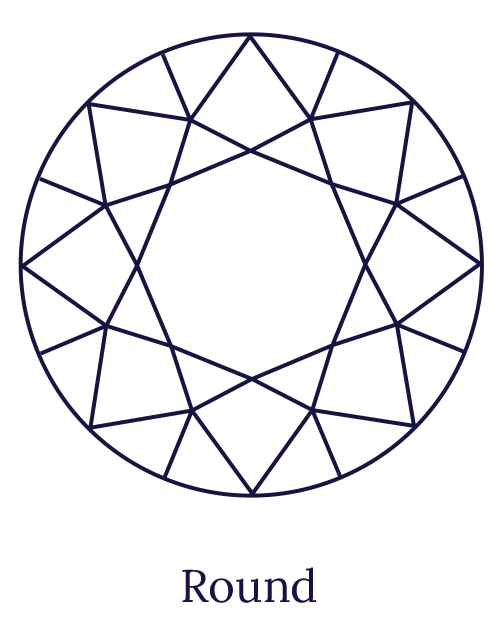
The round brilliant cut diamond stands out as the most favoured diamond shape, renowned for its timeless elegance and versatility. Its classic appeal allows it to complement a wide range of diamond ring styles, accommodating diverse tastes and preferences seamlessly.
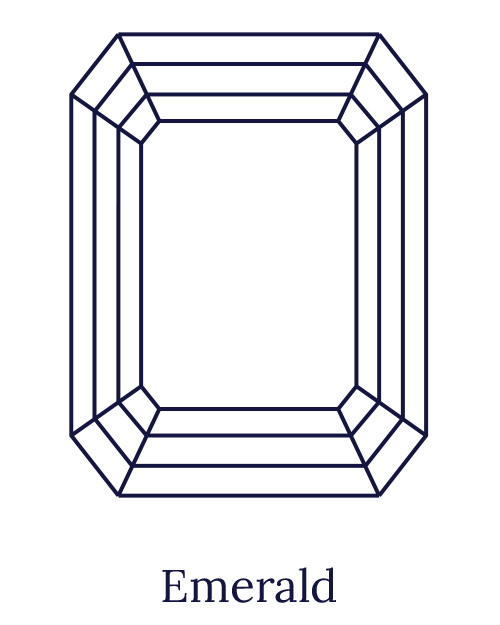
Emerald cut diamonds exhibit a rectangular shape with clipped corners, showcasing a wide, flat surface akin to stair steps when viewed from above. With a shallow pavilion and crown, this cut accentuates the diamond's clarity more than any other.
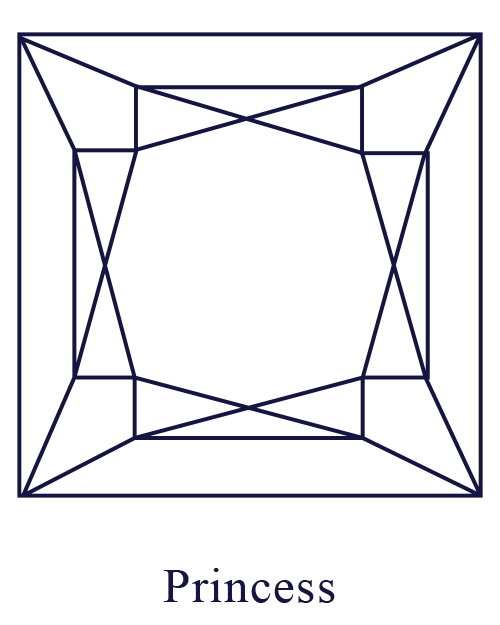
Following the round brilliant cut diamond, princess cut diamonds rank as the second most favoured fancy diamond shape. Just like round cut diamonds, princess cut diamonds are prized for their versatility, making them an excellent choice for various jewellery designs.
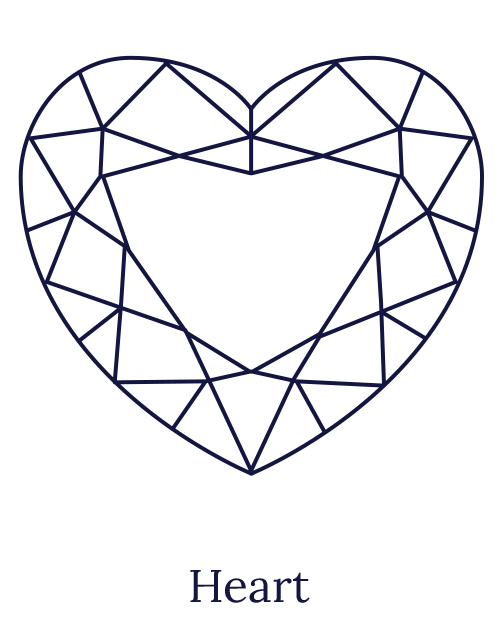
The heart shape, renowned for its romantic allure, stands as an unmistakable symbol of genuine love. Among all diamond shapes, it is considered one of the rarest. With its two symmetrical halves, the heart shape presents a striking and dazzling presence.
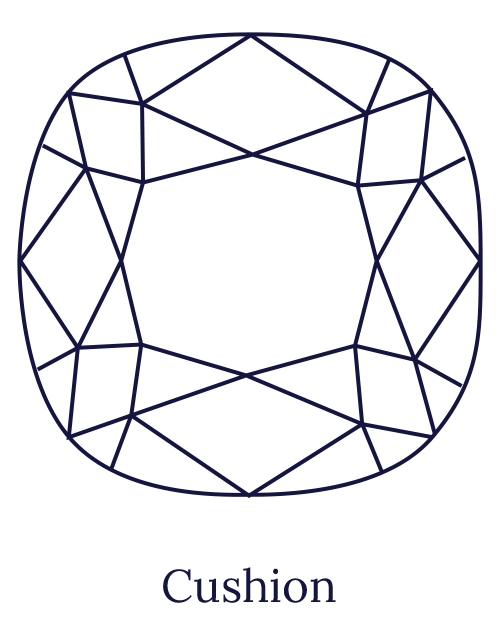
The cushion cut blends the allure of a square-cut diamond with gentle, rounded corners reminiscent of a pillow. Chosen for its versatility in various diamond settings, cushion cut diamonds are a favoured option among many.
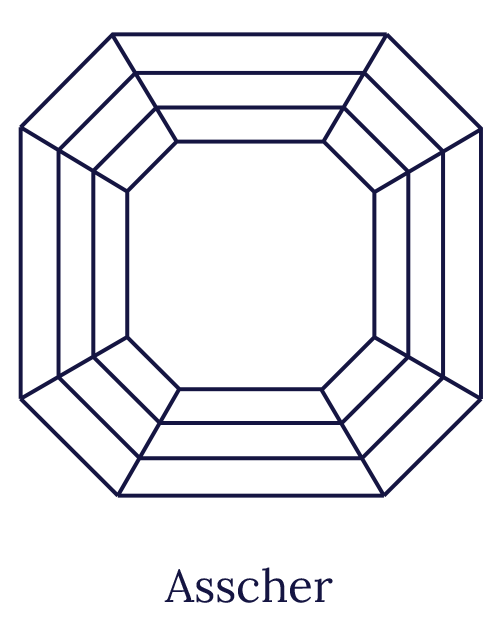
The asscher cut presents a prismatic brilliance and square shape with trimmed corners. This diamond shape exudes a sleek appearance and offers a more understated sparkle compared to the star-like facets found in round brilliant or princess cuts.
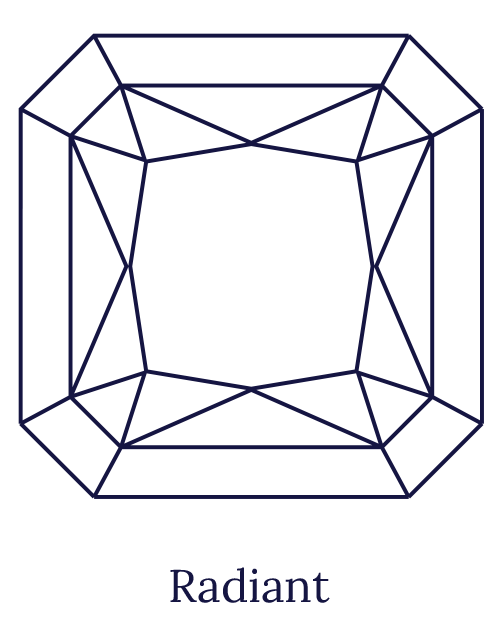
The radiant shape stands out for its uniqueness, as it merges the outline of an emerald cut diamond with the sparkle and brilliance of a round brilliant cut diamond, along with the depth reminiscent of an emerald and princess cut.
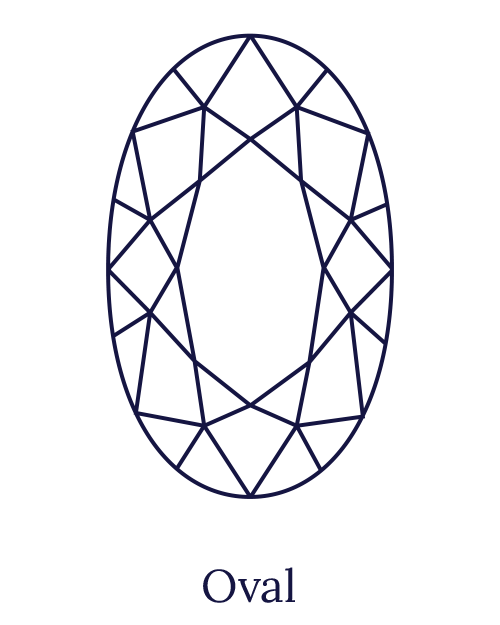
The oval shape falls between the round brilliant cut, exhibiting a comparable brilliance, and the pear shape. Oval cut diamonds possess an elongated form that gives the impression of them being larger than their actual size.
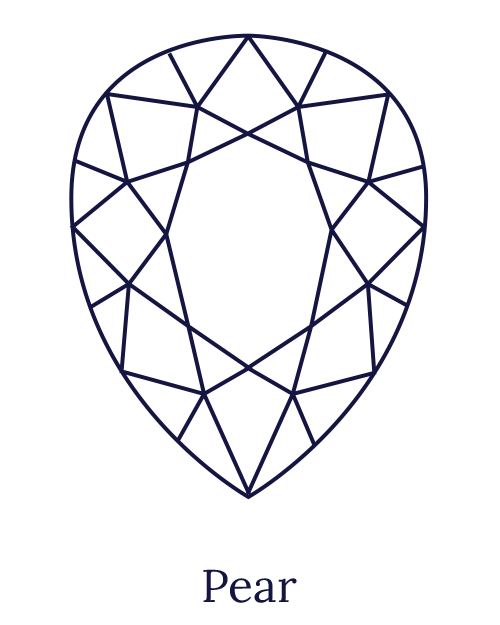
With a rounded edge that tapers to a point at the opposite end, the pear shape is an exceptional hybrid diamond cut that combines the brilliance and design aesthetics of both the round brilliant and the marquise diamond cuts. Resembling a teardrop, its elongated shape enhances carat weight and complements small and slender hands beautifully..
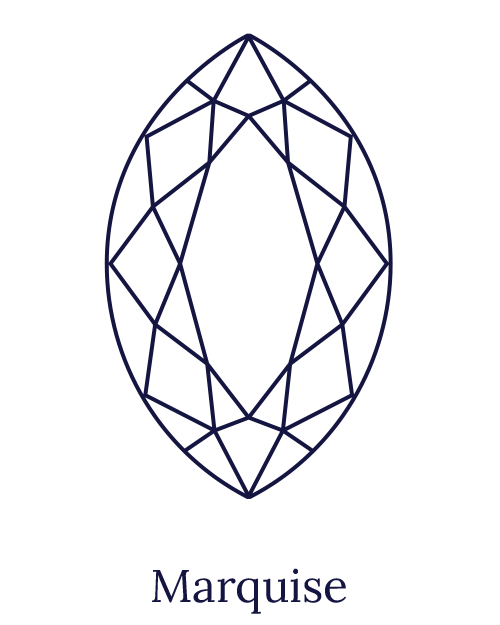
The marquise brilliant shape resembles the hull of a small boat, characterized by pointed ends with a curved middle. Its striking appearance and expansive surface area surpass that of any other diamond shape. Similar to oval-shaped diamonds, it can optimize carat weight and create the illusion of greater size compared to stones of similar dimensions.